
HVAC Lead Generation for Home Services: Own the List
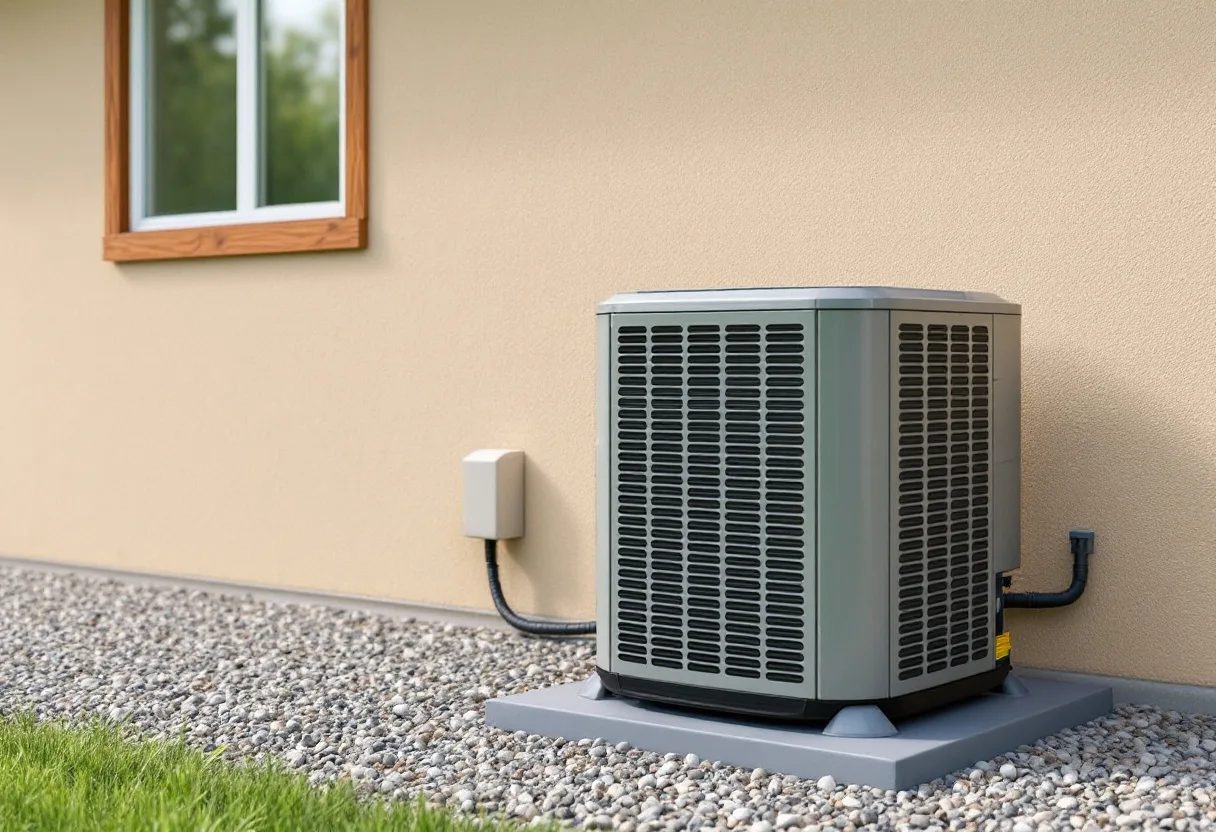
If you run an HVAC company, a window and siding crew, an insulation outfit or a full remodeling shop, you already know the math problem. A shared lead shows up in your inbox, you call it in ninety seconds, and three competitors are already on the phone with the same homeowner. You paid for the privilege of being third.
The alternative is simple and most contractors never try it: buy the underlying homeowner data for your service area, own it, and market to it on your own schedule. Instead of renting access to one name at a time, you get the whole neighborhood.
This is the hub article for the home improvement trades — HVAC, windows, siding, insulation, plumbing, remodeling. The specifics differ by trade, but the strategy is the same.
The Problem With Buying Leads One at a Time
Marketplace lead buying has three structural problems that no amount of speed-to-lead training fixes.
You are not the only buyer. Shared leads are sold two to five times by design. Exclusive leads cost more precisely because the vendor is giving up that extra revenue, and industry estimates suggest exclusive home services leads commonly run well into the hundreds of dollars for high-ticket trades like solar and full HVAC replacement.
You do not own anything. When the lead goes cold, it is gone. You cannot mail that homeowner next spring. You cannot add them to a seasonal tune-up campaign. You rented a name for one conversation.
You cannot control volume or timing. Lead flow spikes when the vendor's ad spend is up and dries up in your slow months. That is backwards from how home services actually works, where you want to be loudest in the weeks before demand hits.
Owning a data list flips all three. You decide who gets contacted, how often, and in what month.
What a Filtered Homeowner List Actually Gives You
US Data Connect sells filtered homeowner data, not phone-verified marketplace leads. The distinction matters, so be clear about what you are buying.
Records are single-family, owner-occupied homes, generally purchased in the last 0–5 years, and 1,000+ sqft. You filter by state and ZIP, see your count, and download a CSV immediately. There are 5,608,904 verified US homeowner records available across 50 states in current inventory, with deep coverage in some markets and thinner coverage in others — for example, 801,463 homeowner records available in Oregon and 179,583 homeowner records available in Florida. Check your own ZIPs before you plan a campaign around a number.
What these records are not: they are not opt-in, not consented, not TCPA-screened, and not "verified" in any sense beyond single-family and owner-occupied. Anyone selling you homeowner data who claims otherwise is overselling. Treat the file as a marketing audience you built, not a list of people who raised their hand.
Why recent purchase date is the useful filter
For home improvement trades, the 0–5 year ownership window is the single most actionable signal you can get from property data.
New owners spend. They inherit whatever the previous owner deferred — an aging furnace, original single-pane windows, siding with a decade left in it at best, an attic with eight inches of settled insulation. They are also still in the mode of fixing up the house rather than living with it.
For HVAC specifically, a home bought three years ago with a system that was already fifteen years old at closing is a replacement conversation, not a repair conversation. You do not know the equipment age from the data, but you know the household profile and the home type, and that is enough to aim a mail piece.
Cost Comparison: Shared Leads vs. Exclusive Leads vs. Owning the List
Here is the comparison that drives the decision. Lead prices below are hedged market ranges, not our figures; the record pricing is ours.
| Shared marketplace lead | Exclusive marketplace lead | Filtered homeowner list | |
|---|---|---|---|
| Typical cost | Many vendors charge roughly $50–$150 per lead, by trade | Industry estimates suggest $150–$400+ for high-ticket trades | $0.009 per record on the $59/month Premium plan |
| Who else has it | 2–5 competitors | You only, for that one lead | You only — your downloaded copy |
| Reusable | No | No | Yes, mail or call the same list all season |
| Volume control | Vendor controls flow | Vendor controls flow | You pull exactly the ZIPs you want |
| Channel options | Phone, fast | Phone, fast | Mail, phone, text, door, digital match |
| Intent signal | Homeowner inquired | Homeowner inquired | None — you create the demand |
That last row is the honest tradeoff. A marketplace lead comes with intent attached; a data list does not. You are trading a known inquiry for scale, exclusivity and repeatability. Run the numbers at the campaign level, not the lead level: if a 5,000-piece mail drop costs you less than two exclusive leads in data cost, the only real variable is print, postage and your follow-up discipline.
For a deeper breakdown of how that math works in a high-ticket trade, the solar leads comparison walks through the same logic at $400-a-lead pricing.
Building the List: How to Filter by Trade
Start with geography, then narrow. The mistake most contractors make is pulling a whole state when their crews realistically serve twelve ZIPs.
HVAC. Pull every ZIP within your service radius. Prioritize older housing stock neighborhoods where recent buyers are inheriting aging equipment. Split the file into shoulder-season waves — late summer for heating, late winter for cooling — so you are in the mailbox before the first hot or cold snap, not during it.
Windows and siding. Go wider geographically than HVAC, because the ticket is high enough to justify a longer drive. Recent purchase date is your best proxy for "actively improving the house."
Insulation. Tight ZIP targeting works best. Insulation sells on utility bills and comfort complaints, and those complaints cluster by housing era and build type within a few neighborhoods.
Plumbing and remodeling. Use the list as a base for repeat touch rather than a one-shot offer. A quarterly postcard to the same 3,000 homes builds the name recognition that wins the call when a water heater fails.
Roofing. Weather events drive timing, but having the list already downloaded means you can mail a storm-affected ZIP within days instead of waiting on a vendor. The roofing guide covers the storm-response workflow in detail.
If you are new to buying property data and want the mechanics — file formats, deduping, suppression lists — start with how to buy homeowner data.
Running the Campaign Without Getting Yourself in Trouble
This is where contractors get sloppy, and it is the part worth being careful about.
Mail first. Direct mail is the lowest-friction channel for a list like this. No consent framework to navigate, no dialer rules, and a postcard sitting on a kitchen counter for a week outlasts a phone call that went to voicemail.
Scrub before you dial. Before any phone outreach, run the file against the National Do-Not-Call Registry and any applicable state registries, and keep your own internal do-not-call suppression list current. Follow TCPA rules on calling hours, automated dialing systems, prerecorded messages and SMS. These records carry no consent, so your calling program has to stand on its own compliance footing. We are not your lawyer — if you are building a dialer or texting operation, have counsel review it.
Honor opt-outs immediately and permanently. One suppression file, applied to every campaign, forever. This is both the legal expectation and basic respect for your market.
Measure by ZIP, not by list. Track response rates per ZIP so you learn which neighborhoods are worth a second and third mailing. After two seasons you will know your territory better than any lead vendor does.
Make the List Work All Year
The real advantage of owning data shows up in month six, not week one.
A marketplace lead is a single transaction. A list of 8,000 homeowners in your service area is an asset you touch four or five times a year: a spring tune-up offer, a summer financing promotion, a fall heating checkup, a winter emergency-service reminder. Same data cost, five campaigns.
Layer in your other channels. Upload the file to build custom audiences for digital ads. Hand a printed subset to a canvassing crew. Match it against your existing customer database to find the homes you have never served on streets where you already have five jobs.
The same principle applies outside the trades — agents and investors use the identical ownership-date filtering to find likely sellers, as covered in real estate seller leads.
The Bottom Line
Shared leads will always have a place for contractors who need volume tomorrow and have the staff to pounce in ninety seconds. But if you want a territory you control, a marketing asset you keep, and a cost structure that does not scale linearly with your ambition, you buy the data.
Filter your ZIPs, see the count, download the CSV, and start mailing. Build your list and find out how many matching homeowners are actually sitting in your service area.
Frequently asked questions
How is a homeowner data list different from a shared HVAC lead?
A shared lead is one consumer's contact info sold to several contractors at once, usually for $50–$400 depending on the trade. A data list is a filtered file of homeowner records you download and own outright. Nobody else bought your copy, there is no per-lead fee, and you can mail, call or text the same list repeatedly across a season.
What exactly is in the records?
Records are single-family, owner-occupied homes, generally purchased in the last 0–5 years and 1,000+ sqft, filterable by state and ZIP. They are not phone-verified, opt-in, or pre-screened for interest. They are property and homeowner records you use to build your own outreach audience.
Can I call or text everyone on the list?
Not without doing your homework first. These records are not consented or TCPA-clean. Scrub against the National Do-Not-Call Registry and applicable state lists, follow TCPA rules on calling hours, automated dialing and texting, and talk to your own counsel about your calling program. Direct mail generally carries fewer restrictions than phone outreach.
How many records do I need for a worthwhile mail campaign?
Most home services pros start with the ZIPs inside a realistic drive radius and pull everything that matches. That is often a few thousand to twenty thousand records. Mail in waves rather than all at once so your crew can keep up with the calls that come back.
What does it cost compared to buying leads?
Pricing is per record with volume discounts, and the $59/month Premium plan drops it to a flat $0.009 per record. At that rate the cost of a full ZIP-level list is typically less than the price of one or two exclusive marketplace leads.