
Real Estate Seller Leads: Own the Data, Skip the Marketplace
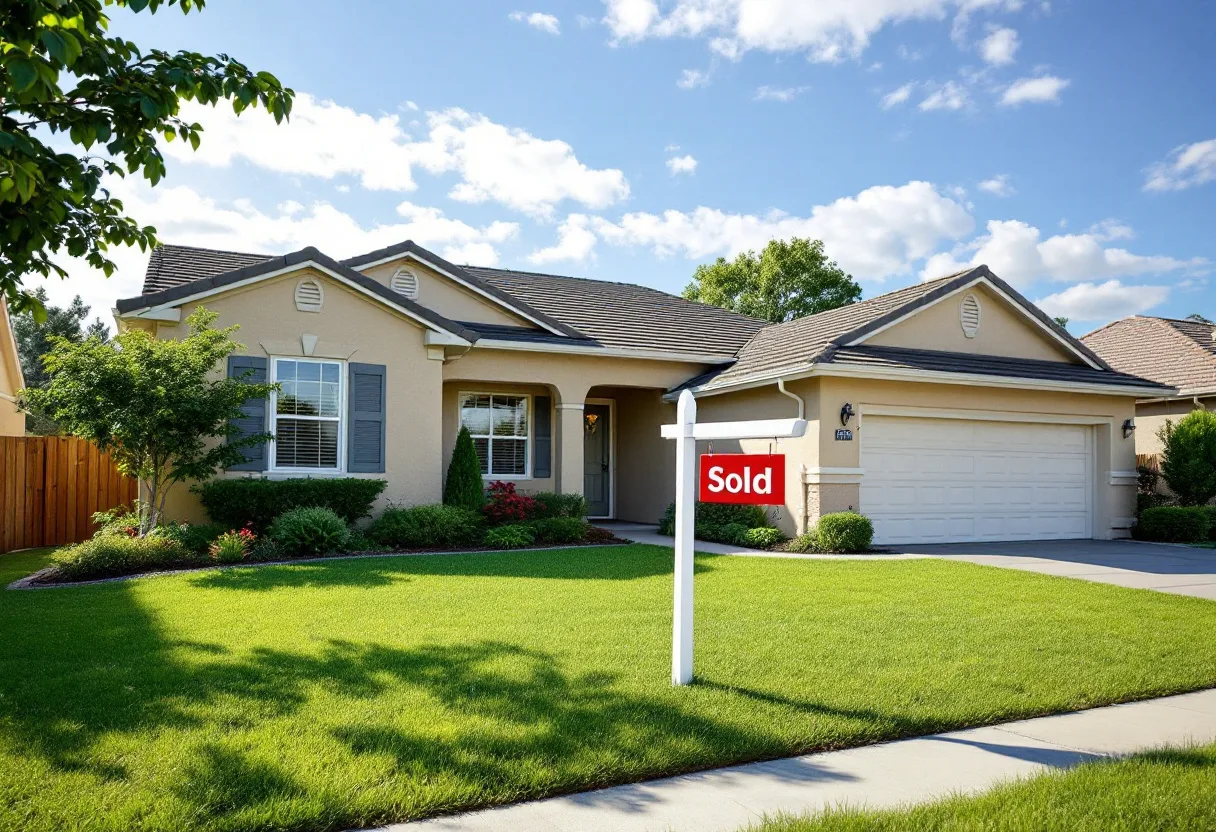
The problem with buying seller leads one at a time
Every agent and investor has run this experiment. You buy into a seller lead platform. The first few come in, you call fast, you get one appointment, and then you notice something: three other agents in your market called the same homeowner within the hour. The seller is annoyed. The lead cost you real money either way.
That's the structural problem with per-lead buying. You're renting access to a contact that someone else owns, usually alongside competitors, at a price set by whoever bids highest in your ZIP. When you stop paying, you have nothing. No list, no history, no asset.
The alternative is the one most serious direct-mail investors have used for decades, just faster and cheaper now: buy the underlying property data, own it, and market to it on your own schedule. US Data Connect's current inventory includes 5,481,617 verified US homeowner records available across 50 states, filterable down to the ZIP. You pick the geography, you download a CSV, and the file is yours.
This piece is for agents and investors specifically. Here's what's in the data, what it's good for, what it isn't, and how the cost actually compares.
What's in a homeowner data list, and what isn't
Be clear-eyed about this, because it's the difference between a campaign that works and one that wastes postage.
What you get:
- Single-family, owner-occupied homes
- Generally purchased in the last 0 to 5 years
- 1,000+ sqft
- Filtered by state and ZIP code
- Delivered as an instant CSV download
What you do not get: a homeowner who raised their hand and said "I want to sell." These are not form fills, not phone-verified appointments, not consented marketing contacts. We don't describe the records as opt-in or consented, and you shouldn't either when you brief your team.
So why is a recent-purchase, owner-occupied file useful for seller and investor work?
Appreciation and equity. Owners who bought in the last several years in most metros have seen their position change materially. Many don't know where they stand today. "Here's what your neighbors actually closed at" is a real reason to open a postcard.
Life-stage movement. The 0 to 5 year cohort contains a meaningful share of people who bought smaller than they needed, took a job that moved, or are mid-renovation and reconsidering. They're not on the market yet. That's the point.
Renovation and refi adjacency. If you also work with lenders, contractors, or insurance partners, recent buyers with 1,000+ sqft single-family homes are exactly who those partners want. A shared list supports co-marketing.
Farm building. For agents, a ZIP-level file of owner-occupied single-family homes is a geographic farm you can mail repeatedly for years. Per-lead buying can't give you that.
If you want the mechanics of filters, volume tiers, and file hygiene in more depth, the complete guide to buying homeowner data covers the workflow end to end.
The cost comparison agents and investors should run
The number that matters isn't cost per lead. It's cost per closed transaction. But to get there you need to see the input costs side by side.
Industry estimates put shared seller leads in the mid double digits and exclusive seller leads well into the hundreds per lead, and referral-fee models take a slice of commission at closing. Here's how that stacks against owning a list, using the published Premium rate of $0.009 per record.
| Approach | Typical cost | Exclusive to you? | Do you own it after? | Contact attempts per dollar |
|---|---|---|---|---|
| Shared marketplace seller leads | Industry estimates suggest roughly $50+ per lead | No, often 3 to 5 agents | No | One contact, then it's gone |
| Exclusive seller leads | Industry estimates suggest $200 to $400+ per lead | Yes, for that lead only | No | One contact |
| Referral-fee programs | A percentage of your commission at closing | Varies | No | N/A |
| Owned homeowner data list | $0.009 per record on the $59/month Premium plan | Yes, it's your file | Yes, forever | Unlimited, across mail, calls, and texts |
Run the arithmetic on your own market. A 10,000-record pull at $0.009 is $90 for the data. That's less than many operators spend on a single exclusive seller lead. Your real costs then shift to production and postage, where mail houses commonly quote well under a dollar per piece at volume, and to the labor of following up.
The important shift is conceptual. With per-lead buying, your cost scales with every conversation. With an owned list, your data cost is fixed and your marginal cost per additional touch is close to zero. Mail the same 10,000 homes four times a year and the data still cost $90.
Building your list by ZIP and county
Investors and agents tend to make the same mistake here: pulling too wide. A statewide file feels powerful and performs badly, because your message stops being local.
A better sequence:
1. Define the geography you can actually service. For agents, that's usually a handful of ZIPs where you have comps and closings to talk about. For investors, it's the submarkets where your buy box and rehab crews work.
2. Check the counts before you buy. Inventory depth varies a lot by state. Current inventory shows 1,801,076 homeowner records available in California and 453,832 homeowner records available in Texas, for example. Pull the count for your ZIPs first so you know whether you're building a 2,000-piece farm or a 40,000-piece campaign.
3. Size the list to your follow-up capacity. A list you can touch six times beats a list three times larger you touch once. If you're a solo agent with no ISA, 2,000 to 5,000 records mailed quarterly is a real program. If you have a dispo and acquisitions team, go wider.
4. Layer your own data. This is where investors separate themselves. Merge the base CSV against county assessor and recorder exports, your MLS history, your old CRM records, and any skip-trace output you already pay for. Flag mailing-address mismatches, tenure, and estimated equity yourself. The base file gives you the owner-occupied single-family universe; your overlays give you the priority order.
5. Keep the file clean. Dedupe against active clients and past sellers. Suppress addresses that have already transacted. Keep a permanent do-not-mail and do-not-contact list, and apply it to every export going forward.
Outreach that respects the rules
The upside of owning data is control. The obligation that comes with it is doing your own compliance work, because nobody is doing it for you.
Practical, general guidance:
- Direct mail is the lowest-friction channel. No registry scrub required for postal mail, and a plain postcard with a specific local number on it still performs. Handwritten-style envelopes and simple typed letters do the heavy lifting for most investor campaigns.
- Before any calling, scrub against the federal Do-Not-Call registry and applicable state registries. Build the scrub into your process so no export ever reaches a dialer unscrubbed.
- Follow TCPA requirements for calls and texts, including consent rules, calling-window restrictions, and identification requirements. Texting a purchased list is the highest-risk thing you can do with property data; treat it accordingly and get guidance from your own counsel or compliance team.
- Honor opt-outs instantly and permanently. One suppression list, applied everywhere.
- Follow your state real estate advertising rules on license disclosure and solicitation language in every piece you send.
None of the above is legal advice. It's operational hygiene, and it's the same hygiene the contractors we work with apply. If you want to see how other trades sequence mail and calls off the same kind of file, the roofing leads guide breaks down a multi-touch cadence, and the solar list versus per-lead breakdown shows the same cost math in a higher-ticket vertical.
Measure it like an investor, not like a lead buyer
Per-lead buying trains you to watch cost per lead. Owning a list means you should be watching three other things.
Cost per conversation. Total campaign spend divided by the number of live human conversations it produced. This is the honest number.
Cost per appointment or contract. For agents, listing appointments. For investors, signed contracts. Track it by ZIP, because your best submarket and your worst can differ by an order of magnitude.
Touches to response. Most responses to a cold owner-occupied file come after multiple touches, not the first. If you judge a list after one mail drop, you'll throw away a working asset. Commit to a sequence before you buy.
One more advantage worth naming: the list keeps paying. A farm you mailed in Q1 is the same farm you mail in Q3, and the households who didn't respond the first time are exactly the ones your competitors never followed up with. That compounding is impossible when you're buying contacts one at a time.
Getting started
Pick two or three ZIPs you know cold. Pull the count. Buy a file you can actually follow up on, merge in your own county and CRM data, scrub before you dial, and mail it more than once.
Build your list and check the record counts in your target ZIPs before you commit a dollar. If you also serve contractor partners, the own-the-list approach used in HVAC and home improvement is the same playbook applied to a different offer.
The seller lead you buy today is gone tomorrow. The list you own is still there next quarter.
Frequently asked questions
Are these real estate seller leads or raw property data?
It's data, not leads. Every record is a single-family, owner-occupied home, generally purchased in the last 0 to 5 years and 1,000+ sqft, filtered by state and ZIP. Nobody filled out a form asking to sell. You turn the data into leads with your own mail, calls, and texts.
Can I call or text the phone numbers on these records?
Treat outbound calling and texting as a compliance project before it's a marketing project. Scrub your list against the federal and state Do-Not-Call registries, follow TCPA requirements for calls and texts, honor opt-outs immediately, and check with your own counsel or compliance team on how the rules apply to your business. We don't represent the records as opt-in or consented.
How do I find absentee or high-equity owners?
The list gives you the owner-occupied, single-family universe in your target ZIPs and counties. Most investors and agents layer county assessor and recorder data, or their own MLS and CRM history, on top of that base file to flag tenure, mailing-address mismatches, and estimated equity. The CSV format makes that merge straightforward in a spreadsheet or your CRM.
What does a list actually cost?
Pricing is by volume, and the $59/month Premium plan sets a flat rate of $0.009 per record. At that rate a 10,000-record ZIP-level pull is $90. Compare that to the per-lead pricing common in seller lead marketplaces, where industry estimates put exclusive leads well into the hundreds of dollars.
How fast do I get the file?
You filter, see the count, pay, and download the CSV immediately. No sales call, no minimum contract, no waiting on a vendor to build a custom pull.